Every homeowner weighing a pre-sale renovation asks the same question the wrong way: "will this add value?" Almost everything adds some value. The real question is whether it adds enough value, fast enough, to be worth the money and the weeks it takes off your listing timeline — and for a lot of projects homeowners consider right before selling, the honest answer is no.
Here's how to actually make that call.
The Real Question Is Timeline, Not Just Value
A full kitchen remodel can add real resale value, and it can also take 8 to 12 weeks from the first demo day to a finished space. If you're trying to list in six weeks, that project isn't on the table regardless of what it would do for the sale price — you'd be renovating into a listing deadline you can't hit. The first filter for any pre-sale project isn't "is this worth it," it's "do I actually have time to finish it, including the inevitable delays, before I need to list."
This is the single biggest mistake we see: homeowners start a project with good ROI logic behind it, run out of runway, and end up listing a half-finished house — which sells for less than either a finished remodel or the original dated-but-complete version would have.
Fix the Things That Kill a Sale First
Before any cosmetic project, address anything that will show up on a buyer's inspection report as a real problem: roof issues, HVAC that's failing, electrical that's not up to code, plumbing leaks, foundation cracks. These don't add "value" in the way a new kitchen does, but skipping them doesn't save money either — they either kill a deal after it's already in escrow, or they get renegotiated out of your price at a worse rate than fixing them upfront would have cost.
A dated kitchen reads as a style choice to most buyers. A failing roof reads as a reason to walk away or demand a steep credit. Handle the second category before you spend a dollar on the first.
Where a Light Refresh Beats a Full Remodel
This is the part that surprises homeowners most: for a pre-sale project specifically, a strategic refresh often outperforms a full gut remodel on a cost-to-benefit basis, because buyers are responding to "does this look updated," not "was every material replaced."
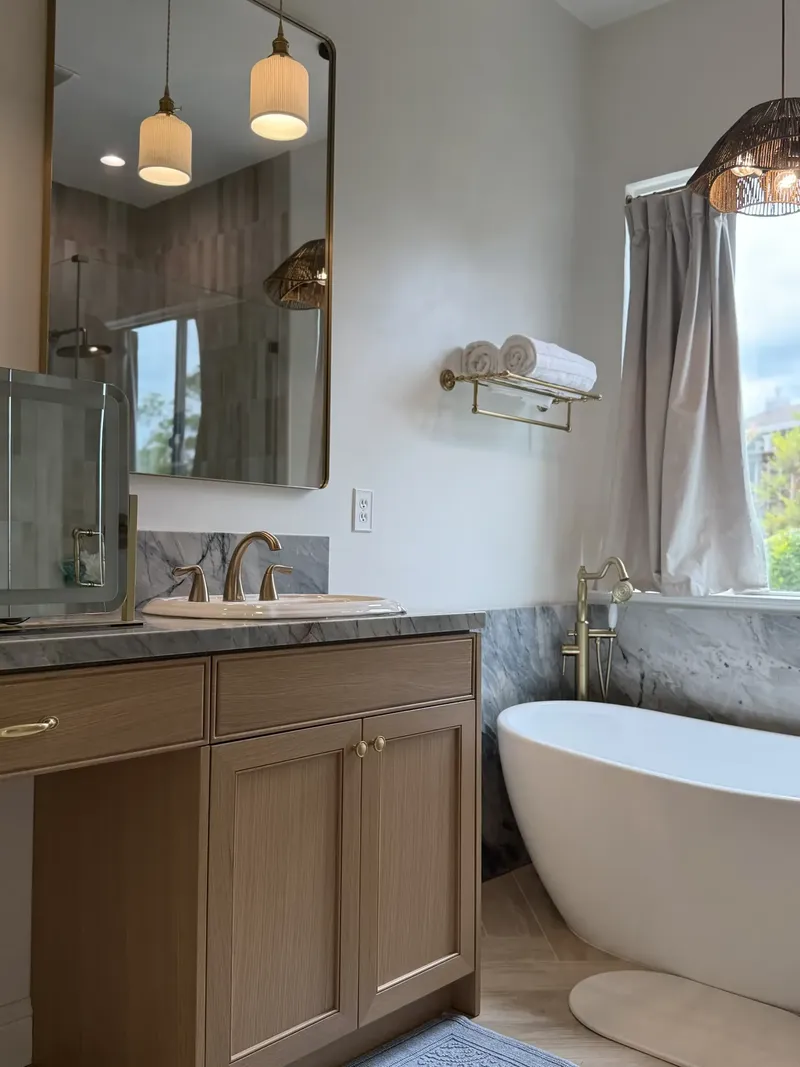
In a kitchen, that usually means: repainting or refacing cabinets instead of replacing them, swapping outdated hardware and light fixtures, replacing a dated countertop, and addressing anything visibly worn (chipped tile, yellowed grout, dated backsplash). In a bathroom, the equivalent is a new vanity, updated lighting and mirror, fresh caulk and grout, and a reglazed or replaced tub/shower surround if it's visibly dated. Both read as "recently updated" to a buyer walking through, at a fraction of a full remodel's cost and timeline.
A full gut remodel makes more sense when you're staying in the house long enough to actually live with it, not when the primary goal is getting the best price at closing in the next few months.
If you're even considering a pre-sale renovation, start the conversation with a contractor at least 3 to 4 months before you want to list, not 3 to 4 weeks. Permitting, material lead times, and normal scheduling eat into that runway fast, and a project that starts too close to your listing date is how homeowners end up making rushed decisions or listing mid-renovation.
Curb Appeal Punches Above Its Cost
The outside of the house is the first thing every buyer sees, in person and in listing photos, and it's consistently one of the best-value categories for a pre-sale project because the cost is low relative to the impact. A new garage door, a refreshed or repainted front door, updated exterior paint on trim and siding where it's peeling or faded, and basic landscaping cleanup all move the needle on first impression without anywhere near the cost or timeline of an interior remodel.
If your budget is limited and you have to choose between an interior refresh and exterior curb appeal work, exterior work is usually the better first dollar spent — it affects whether buyers get out of the car excited or already skeptical before they've seen anything else.
What to Skip Entirely
Highly personalized or trend-specific choices. Bold paint colors, unusual tile patterns, and statement fixtures that reflect your taste rather than a broadly appealing neutral aren't worth doing right before a sale — buyers want to be able to picture their own things in the space, and personalized choices work against that.
Luxury upgrades that don't match the neighborhood. A high-end primary suite renovation in a starter-home neighborhood won't return its cost, regardless of how well it's built — buyers in that price bracket aren't shopping for that level of finish, and appraisals will reflect comparable sales in the area, not your renovation budget.
Anything you won't finish in time. Worth repeating: an unfinished project is worse than no project. If the timeline doesn't work, skip it and let staging and pricing do the work instead.
What to Do Instead of a Full Remodel
If a fuller remodel is genuinely on the table because you have the timeline for it — a longer runway before listing, or you're renovating with the intent to enjoy it for a while before eventually selling — our breakdown of bathroom remodel ROI in the Sacramento market covers the actual percentage-level data on what different remodel tiers return at resale, and is worth reading before committing to a full scope.
Making the Call
Work through it in this order: fix anything that would fail an inspection, then handle curb appeal, then decide between a light refresh and a full remodel for the kitchen and primary bathroom based on how much timeline you actually have — and skip anything personalized or out of step with the neighborhood, regardless of how much you'd enjoy it yourself.
Our kitchen remodeling and bathroom remodeling pages cover our approach to scoping a project around your actual timeline and goals, and we're glad to walk through whether a refresh or a full remodel makes more sense for your specific sale timeline — we work with homeowners across Roseville, Rocklin, and the rest of the greater Sacramento area.
If cost is the main open question on a kitchen project specifically, our guide on what a kitchen remodel actually costs is a useful next read.